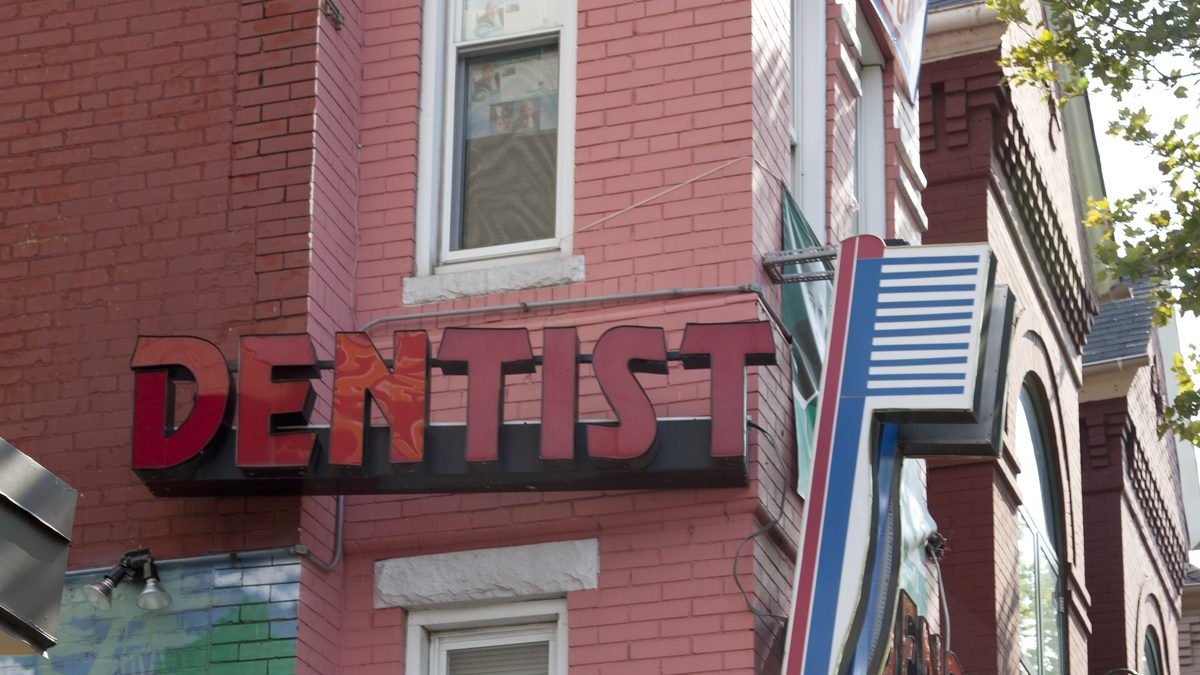
Photo: Carol M. Highsmith, public domain, via Wikimedia Commons and the Library of Congress.
If you have just opened a clinic, most of the advice you will find on getting patients says the same things: run Google and Instagram ads, post before-and-after photos, and ask every happy patient for a video review. Very little of it mentions that dentists in India have their own rules on advertising.
Those rules came back into focus on 14 October 2026, when the National Dental Commission issued an advisory on social media promotion by dentists. The short answer is that you can advertise, within limits. This article goes through what the advisory says, which rules it points to, and how they apply to the posts and ads a new clinic is likely to run.
The document is Advisory File No.2/Advisory/EDRB/NDC/2026/M-2672, addressed to all registered dental practitioners and signed by a Member of the NDC's The NDC board that keeps the registers of dentists and dental auxiliaries and handles professional conduct.. Its subject is "Unethical Social Media Promotion and Advertising by Registered Dentists".
It says the Commission has noticed dentists and establishments engaging in "potentially unethical promotional activities on social media", and it names them:
It then tells every registered dentist to "strictly adhere" to Chapter VI (Unethical Acts), Clauses 8.1, 8.2 and 8.3 of the Revised Dentists (Code of Ethics) Regulations, 2014, and says the advisory takes effect immediately.
The Revised Dentists (Code of Ethics) Regulations, 2014 were made by the old Dental Council of India. The NDC's advisory tells dentists to follow them, so they are still the rulebook the Board is applying. Three clauses matter here.
Clause 8.1, Advertisement, opens with a permission, not a ban: "A Dentist or a group of Dentists may advertise provided that they maintain decorum". It then lists what is unethical, including demeaning solicitation and false promises (8.1.1), camps and handbills aimed at schools, colleges and old age homes (8.1.2), agents or canvassers paid to bring in patients (8.1.4), disproportionately large signs (8.1.5), Promotion dressed up as something else. Here, public education on TV or in a magazine that carries the clinic's address or phone number to bring in patients. (8.1.8) and on-screen TV scrollers with a dentist's name and number (8.1.9).
Clause 8.2, Soliciting, says a dentist must not make themselves the subject of publicity that would "ordinarily result in his self-aggrandizement", must not endorse a drug or commercial product, and must not "boast of cases, operations, cures or remedies or permit the publication of report thereof through any mode." It then lists what is permitted, covered in the next section.
Clause 8.3, Publicity and Signage, covers signboards and letterheads: no self-photograph on either (8.3.1), a sign no larger than needed to show where the clinic is, with nothing on it but the dentist's name and qualifications and no flickering light signs (8.3.2), and no claim to be a specialist without a specialty qualification recognised by the Council (8.3.3).
Clause 8.2 lists what a dentist may do. These are the parts a new clinic can lean on:
That last point surprises people. Publishing your fees is expressly allowed, and the clause gives the reason: it helps patients "make informed choices through a transparent system."
The Code was written in 2014 and does not name Google, Instagram or WhatsApp. The advisory does name social media, and points back to the same clauses. Here is how the common posts line up against the text.
| What the clinic posts | What the text says | Where |
|---|---|---|
| Google Business Profile with address, hours and services | Internet listings are permitted as public information, without claims of superiority | 8.2.8 |
| Website page listing treatments and fees | Expressly permitted, if every statement is factual | 8.2.9 |
| "Best dentist in the city" or "No. 1 implant centre" | A claim to superiority is unethical; so is "best" or "first" when announcing services | 8.2.7, 8.2.8 |
| Before-and-after photos | Named in the advisory; 8.2 bars boasting of cases or publishing reports of them "through any mode" | M-2672, 8.2 |
| Patient testimonial videos | Named in the advisory | M-2672 |
| Reels filmed during a consultation or procedure | Named in the advisory | M-2672 |
| Endorsing a toothpaste or a product brand | Endorsing a commercial product is unethical | 8.1.6, 8.2 |
| Free check-up camp at a school, college or old age home | Unethical, unless run by a registered charity giving fully free care | 8.1.2 |
| Paying an agent or "leads" service per patient | Employing an agent or canvasser to obtain patients commercially is unethical | 8.1.4 |
| Large, lit or flashing signboard, or your photo on it | Unethical; the board carries your name and qualifications only | 8.1.5, 8.3.1, 8.3.2 |
Two cases are less clear, and it is better to say so than to guess.
Paid ads. Nothing in Chapter 6 bans a paid Google or Instagram ad as such. Clause 8.1 permits advertising with decorum, and 8.1.1 bars "false promises" in advertising. So an ad is judged on what it says: an ad that lists your clinic, location and services sits close to 8.2.8 and 8.2.9, while one that promises results or claims to be the best does not.
Educational posts with your phone number. Clause 8.1.8 bars surrogate advertising "in the garb of educating the public through TV programs, magazines or periodicals" that carries the clinic's address or phone number. It does not mention social media. An oral health reel that ends with your clinic's number has the same shape, but the text does not settle whether the Board would read it that way. If you post health information, the advisory's concern with "inaccurate health information" means it should be accurate whether or not it carries your number.
A before-and-after photo or a testimonial video also shows an identifiable patient. The Digital Personal Data Protection Act, 2023 defines personal data as "any data about an individual who is identifiable by or in relation to such data" (Section 2(t)), and where consent is the basis for using it, Section 6(1) says it must be "free, specific, informed" and limited to the purpose it was given for. A photo taken for the treatment record was taken for treatment, not for Instagram. Our article on collecting consent that holds up under DPDP covers what a valid consent looks like.
The advisory says: "Any established violation may invite appropriate disciplinary action, including issuance of a A formal letter asking you to explain, in writing and by a deadline, why action should not be taken against you., suspension or removal from the State and National Register of Dentists, as permissible under applicable law."
Note the wording: "may invite", and only for an "established" violation. The advisory does not set a fine or a fixed penalty. But it is a written statement from the Board that regulates professional conduct, naming the exact posts it is concerned about. After 14 October 2026, "I did not know" is a weak answer to a complaint about any of them.
This is a reading of the published text, not legal advice. If your State Dental Council has issued its own guidance, read that too.
Yes, within limits. Clause 8.1 of the Revised Dentists (Code of Ethics) Regulations, 2014 says a dentist or group of dentists may advertise provided they maintain decorum. The same chapter rules out false promises, claims of superiority, boasting of cases, product endorsements, paid canvassers and oversized signs. The National Dental Commission's advisory of 14 October 2026 tells dentists to follow these clauses.
The National Dental Commission's advisory of 14 October 2026 names publishing patient testimonials and before-and-after photographs among potentially unethical promotional activities on social media. Clause 8.2 of the 2014 Code of Ethics also bars a dentist from boasting of cases or permitting reports of them to be published through any mode.
The advisory says any established violation may invite disciplinary action, including a show-cause notice, suspension or removal from the State and National Register of Dentists, as permissible under applicable law. It does not set a fine or a fixed penalty.
Dentomate's Free plan keeps patient records for one clinic, with up to 20 new patients a month. WhatsApp recall campaigns start on Starter.