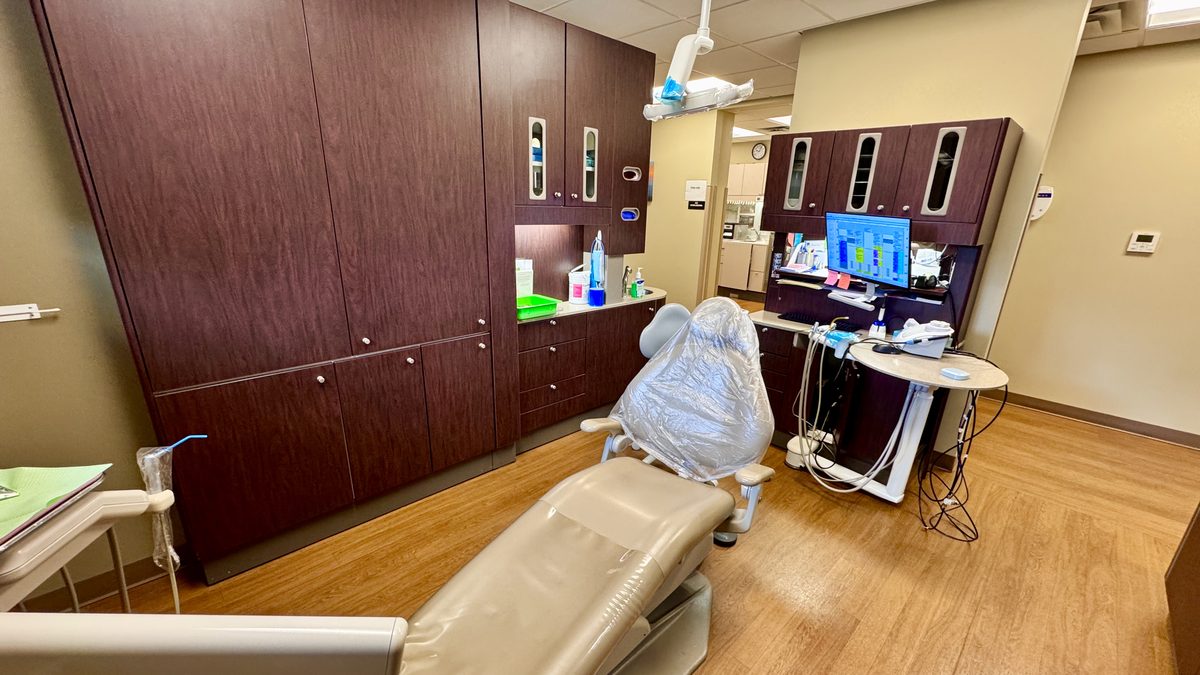
Photo: Harrison Keely, CC BY 4.0, via Wikimedia Commons.
A patient who misses an appointment creates a particular kind of loss. The chair, the dentist and the assistant are present and set up regardless of whether the patient arrives. When the slot passes empty, those minutes are gone: unlike a product business, there is no inventory to sell later. The loss is not dramatic enough to feel like a crisis and it happens often enough to feel normal, which is exactly why it compounds quietly over a year.
The calculation is simple: divide your clinic's average daily revenue by the number of appointment slots you run. Each unfilled slot costs that fraction of a day's income. For a clinic that sees fourteen patients a day and runs on 30-minute appointments, one no-show erases roughly 7% of the day's collections. Two is 14%.
The number is not recoverable. A last-minute cancellation might allow for a replacement booking if the clinic keeps a waiting list, but a true no-show usually gives no advance notice at all. The front desk has already confirmed the day's schedule, the chair is set up, and the next available slot is tomorrow at the earliest.
There is also a secondary cost that is harder to account for: the chair sitting empty removes the urgency that keeps a clinic schedule tight. Staff experience a burst of low-productivity time; the dentist's day loses its rhythm. Neither cost appears on any invoice.
A study of pediatric dental appointments in Navi Mumbai, published in the International Journal of Clinical Pediatric Dentistry, found that 52% of parents had missed at least one dental appointment for their child. Among the reasons given, forgetfulness ranked at the top. When the same respondents were asked what intervention would help them keep future appointments, 48.3% said a call from the dentist the day before would be the most useful reminder.
The same study noted that 52% of respondents were relying entirely on their own memory to track the appointment date. Fewer than half were using a diary or their phone.
The implication is straightforward: most no-shows in Indian dental clinics are not intentional. They are patients who forgot, and who would have come if someone had reminded them.
Three moments in the booking cycle each carry a meaningful chance to prevent a no-show. Together they address different failure modes: doubt after booking, forgetfulness in the day before, and last-minute disengagement on the day itself.
Sent immediately when the appointment is created, this message serves several functions that are easy to underestimate. It confirms that the booking actually went through, which removes a quiet source of uncertainty for patients who wonder whether the slot is really held. It puts the date and time in the patient's messaging history, which is usually more accessible than a calendar entry. And it gives the patient a natural opportunity to flag a conflict immediately, before the clinic has turned away other patients for the slot.
This message can be sent manually by the front desk at the time of booking, as a free-form WhatsApp reply if the patient has been in touch recently, or through any automated booking integration.
This is the message the Navi Mumbai respondents said they wanted. It addresses the most common failure mode directly: the patient simply forgot.
The challenge is sending it consistently. A front desk that relies on a manual process will catch most patients but miss a few, especially on busy days. Automating it removes the dependency on memory at both ends.
Dentomate sends this reminder automatically. The system runs an hourly check and sends a WhatsApp message to every patient whose appointment falls in the window 22 to 26 hours ahead of the current time. The window is wider than a single hour so that a late-evening appointment the previous day does not fall between two hourly runs and miss its reminder entirely. The timing means the message typically lands in the patient's phone on the morning or afternoon before the appointment, when they can act on it.
The message includes the patient's first name, the clinic name, the date and the time. It uses a A category of WhatsApp message for appointment confirmations and follow-ups on existing transactions. Utility templates are pre-approved by Meta and priced below marketing messages. They can be sent even when a patient has not messaged the clinic recently., which is a WhatsApp message category for appointment-related outbound sends. Meta prices utility templates at roughly ₹0.115 per delivered message in India (plus 18% GST), under the rate card effective July 2026. For a clinic sending 100 reminders a month, that is about ₹14 in WhatsApp charges before tax. If the patient has messaged the clinic recently and the Meta's customer service window opens when a patient messages the clinic first. It stays open for 24 hours, during which replies and utility templates cost nothing to send. is still open, the reminder costs nothing at all at the WhatsApp layer.
Automated appointment reminders are available on the Starter and Pro plans. Free plan clinics can book appointments and send reminders manually from the WhatsApp inbox.
This is a shorter message sent on the morning of the appointment, a few hours before the slot. Its purpose is different from the day-before reminder: it is not for patients who forgot, but for patients who are on the edge of cancelling and have not yet decided.
A brief message that confirms the time and makes it easy to cancel ("Reply CANCEL if you can't make it and we will find you another slot") does two things. It reduces last-minute silent no-shows by giving the patient an easy out that does not require a phone call. And it gives the clinic enough notice to fill the slot from a waiting list.
This message is best sent as a free-form reply to a patient who has recently been in contact, or as a quick WhatsApp message from the front desk. Since it typically falls within the 24-hour window from a recent exchange, it usually costs nothing at the Meta billing layer.
Three messages, three different purposes. The booking confirmation makes the appointment real. The day-before reminder addresses forgetfulness, which the evidence shows is the most common cause of no-shows. The same-morning nudge addresses the undecided patient and, by making cancellation frictionless, converts silent no-shows into early cancellations the clinic can fill.
None of the three requires complex infrastructure. The day-before reminder is the one most clinics struggle to send consistently because it requires remembering which patients have appointments tomorrow, which is exactly the kind of manual overhead that automation removes.
Dentomate sends a WhatsApp appointment reminder 24 hours before every booking on Starter and Pro plans. No manual list, no missed patients.